
TCU Place CEO Highlights Growth, Downtown Potential, and the Future of Saskatoon’s Event Landscape
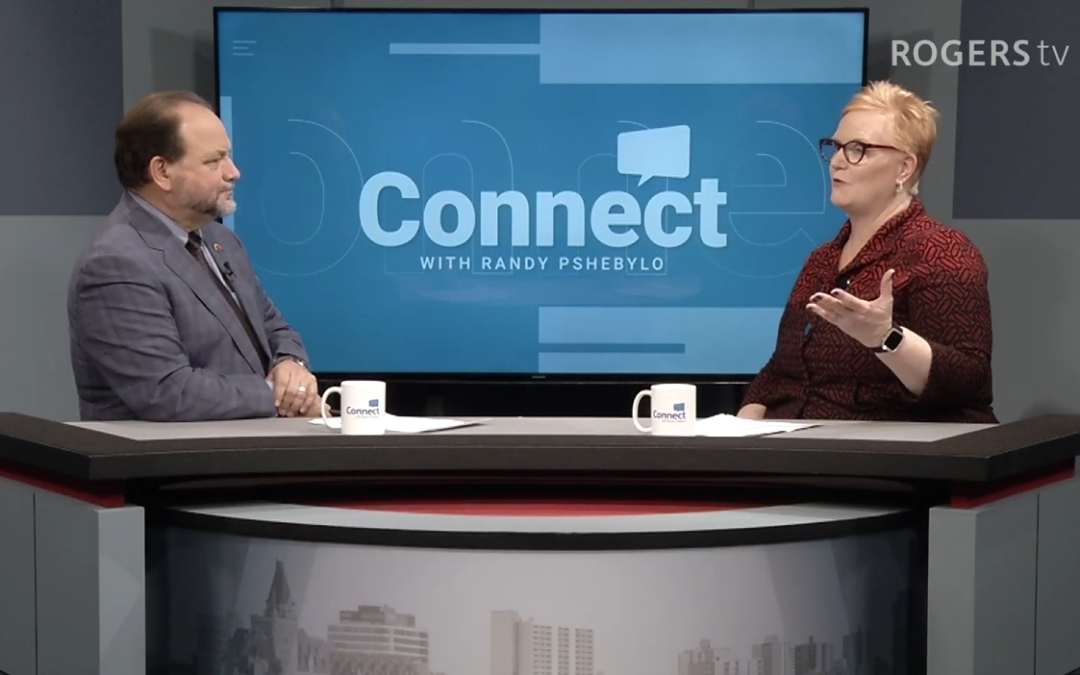
In a wide‑ranging conversation on Connect, CEO Tammy Sweeney offered a look at the evolving role of TCU Place in Saskatoon’s cultural and economic landscape. Speaking with host Randy Pshebylo, Sweeney detailed record‑breaking performance in 2025, the economic value of conferences, the need for renewed downtown investment, and her vision for a unified event and entertainment district in the decade ahead.
Interview Transcript – Tammy Sweeney, CEO & Executive Director, TCU Place on Connect with Randy Pshebylo
Feb 6, 2026
Randy:
Saskatoon’s TCU Place continues to shine in our city. It’s been busier than ever. We have the CEO, Tammy Sweeney, with us. Thanks for coming to the studio today.
Tammy:
Thank you, Randy. I’m happy to be here.
Randy:
I don’t know if it’s just me, but it generally seems that TCU Place was busy — but it’s been busier. What’s been happening there lately?
Tammy:
We’ve had our best year ever in ’25. We had more events than ever before. We had some pretty high‑calibre events like the First Ministers Conference and another conference that brought together politicians from the Midwestern U.S. and Canada. More shows in our theatre — our theatre business has tripled in the past couple of years. More community events.
Our team is outstanding — we’ve got about a 90% retention rate, which in the hospitality market is unheard of. People are enjoying working there, clients are loving it, client retention is strong, revenues are strong.
Everything we’ve been working on for the past four years and rebuilding post‑pandemic is really starting to fall into place. I’m thrilled with how we turned out in ’25.
Randy:
Let’s look at some of the future. If we were back in the 1960s when the train tracks were coming out and there was this massive investment into the Centennial Auditorium — something that had never been done before — what do you see with the convention world and TCU Place? And then maybe we’ll branch out into the larger DEED conversation.
Tammy:
The original Centennial Auditorium is a beloved building. People saw their first concerts, meetings, community events there. It was built far ahead of its time.
It’s a 2,000‑seat theatre that hasn’t changed in 60 years. The population was maybe half of what it is today, so the theatre is well‑sized today but was more than right‑sized then.
The visionaries of that time invested in building a downtown community asset because it brings vitality downtown and helps surrounding buildings and businesses thrive.
Today, we have a nice building — not the most beautiful, but we love it. We keep it shining. But we’re falling behind our counterparts across the country. We’re the last building to be renovated to the next level.
So, when a big conference with 500–600 people wants to stay in our city for three days, they’ll go to a shiny new building in Halifax or Winnipeg unless we do something to keep them here.
It’s important that we keep investing in our downtown. TCU Place and venues like it are revenue‑generating engines for the city — they bring business and people in. If we don’t invest, we lose that draw.
Randy:
That’s a key point. If we look at return on investment — if governments or private sponsors come to the table — what do I get if I spend this much? A theatre is infrastructure that generates income and stimulates activity.
Tammy:
Absolutely. In some ways it’s like a bridge. It’s critical infrastructure because it drives people into your city.
By investing in it, you get a return on investment. Economic impact is how this world is measured.
A theatre show or a three‑day conference — say 500 people — brings roughly a million dollars into the community that wouldn’t be here otherwise.
So by investing in infrastructure that brings revenue, you’re helping to build and develop your city. Unlike a bridge, the theatre pays revenue that can help offset other infrastructure projects.
It also contributes to quality of life. People visit other cities for experiences — we can offer that here too.
Randy:
On the conference end of things: I’ve been to many over the years. People here do the same — exploring, contributing to the economy. One show at SaskTel Centre or TCU Place is an event; but a three‑day conference is sustained economic activity.
Tammy:
Conferences don’t have the same sexy appeal as big concerts — it’s not Garth Brooks or Jelly Roll — but they are steady.
We have 400 events a year at TCU Place. That’s 400 moments of economic activity.
A business traveler at a conference spends about four times what a casual traveller spends. More than 60% of our guests are from outside our postal code, bringing money into our community.
Conference attendees want to explore — museums, restaurants, attractions — it’s part of the experience.
The conference piece gets overlooked, but it is the most important part of venue economics.
Randy:
I grew up with the Centennial Auditorium and now TCU Place. It seems like a natural transition for something else to happen. There’s been talk of the downtown event and entertainment district — the DEED — and the potential arena. You’ve done this type of work in other cities.
Tammy:
Yes — this has been my life for 20 years.
I helped open the Scotiabank Convention Centre (now Niagara Falls Convention Centre). I was part of merging casinos in Niagara Falls. I’ve run an arena in Medicine Hat with a WHL team.
Now I run a convention centre and performing arts centre.
That experience helps me see things through different lenses — what other organizations do well and what we can learn.
Even if there’s talk of merging organizations here, having that experience helps ensure a smooth transition.
Randy:
Looking at merging — the convention centre, performing arts centre, possibly a new arena — what’s your perception of how that unfolds? Can we do it with financial viability?
Tammy:
Co‑locating the arena, convention centre, and performing arts centre gives operators choices and synergies. Maybe one box office instead of two. Shared finance. Natural efficiencies.
But you have to commit to being one organization for it to work.
Guest services must have consistent standards across venues.
A strong leadership team is essential — arena and convention centre cultures are often very different.
We want to maximize utilization — book more events, keep them coming back, deliver strong guest experiences.
If organizations merge, leadership will be key to maintaining stability.
Every decision today impacts us in 10 years. Investments in infrastructure, people, and technology improve guest and employee experience — which keeps events returning.
Disruption handled poorly could negatively impact clients and future business.
Randy:
I admire the technology you use — your sound crews are excellent. The visuals, the tech — it’s wild to say, “This is my city,” and see how we compete. But we’re becoming a bit of a flyover city due to lack of investment.
Tammy:
We have incredibly strong people — the best theatre, sound, and tech crews in the province. They make magic happen.
But if we don’t invest and upgrade, we will become more of a flyover city.
We do a lot with a little.
TCU Place receives $500,000 a year from the city — the second lowest in Canada for purpose‑driven convention centres.
We generate $15 million a year in revenue. That funding hasn’t increased in 30 years.
Yet our leadership team continues to deliver strong results as the building evolves.
Randy:
I admire what you’ve brought to this city. Congratulations on a successful year — let’s hope for another great one in ’26.
Tammy:
Thank you. I’d be happy to come back for an update.
Randy:
That’s our show for today. Thanks to our guests Chad Hilton from the Saskatchewan Pension Plan and Tammy Sweeney from TCU Place in Saskatoon. I’m your host, Randy Pshebylo. We’ll see you next time on Connect.